

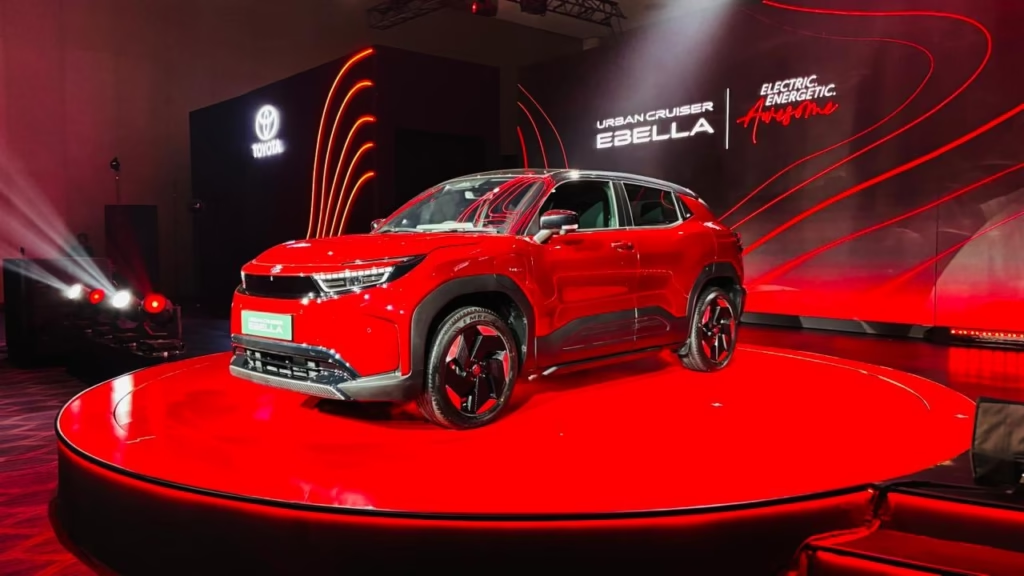
Toyota has officially unveiled the Urban Cruiser Ebella EV for the Indian market, signalling a clear shift in the company’s approach to electric mobility. Unlike earlier low-volume EV experiments, the Ebella is positioned as a mainstream, family-oriented electric SUV, aimed directly at the fast-growing mid-size segment.
This unveiling matters because Toyota is no longer testing the waters—it is preparing for scale, competition, and long-term EV ownership in India.
Key Highlights
- Toyota Urban Cruiser Ebella EV officially unveiled for India
- Two battery pack options confirmed by Toyota
- Claimed driving range of up to 543 km
- Battery-as-a-Service (battery rental) model introduced
- Focus on safety tech, long-range usability, and ownership confidence
Toyota Urban Cruiser Ebella EV: What Is Confirmed
The Urban Cruiser Ebella EV is Toyota’s first electric SUV developed specifically with Indian usage patterns in mind. Rather than chasing aggressive performance figures, Toyota has focused on range, durability, and predictable ownership costs.
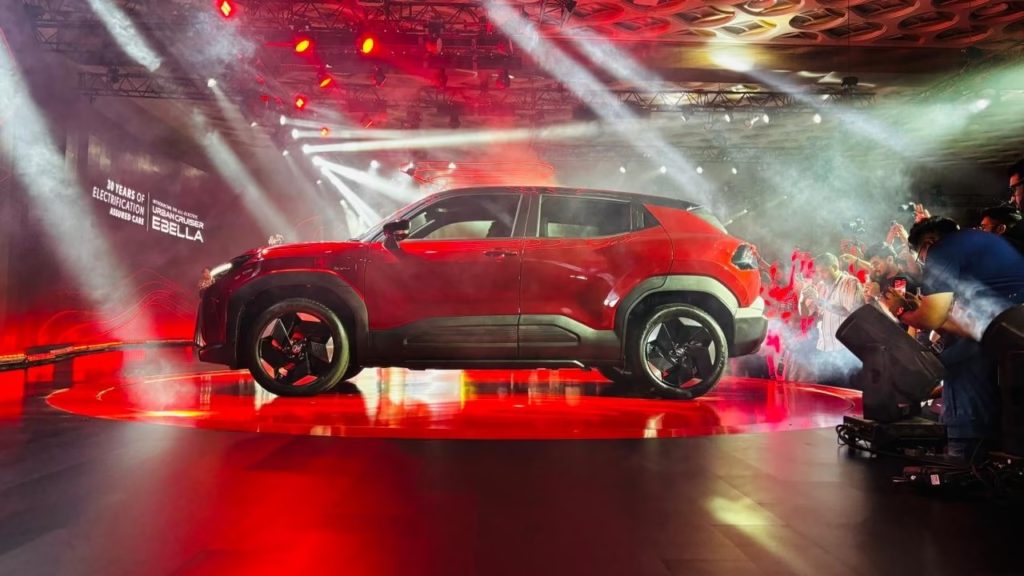
Battery, Range & Powertrain
Toyota has confirmed two LFP battery options, prioritising longevity and thermal stability over peak output.
| Battery Pack | Drive Layout | Claimed Range |
|---|---|---|
| 49 kWh | Front-wheel drive | Over 400 km |
| 61 kWh | Front-wheel drive | Up to 543 km |
The emphasis on a 500+ km claimed range reflects Toyota’s intent to address range anxiety, especially for buyers upgrading from petrol SUVs.
Fast-charging support will be available, though detailed charging times are yet to be disclosed.
Design & Cabin Focus
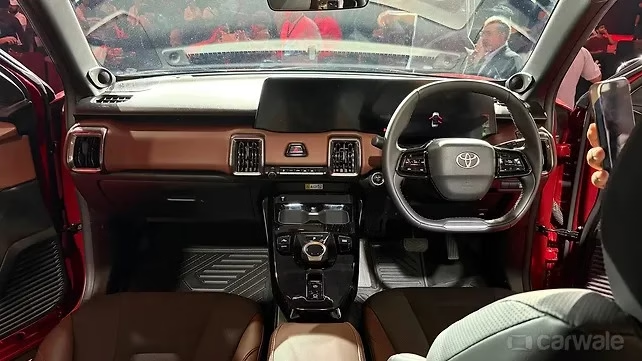
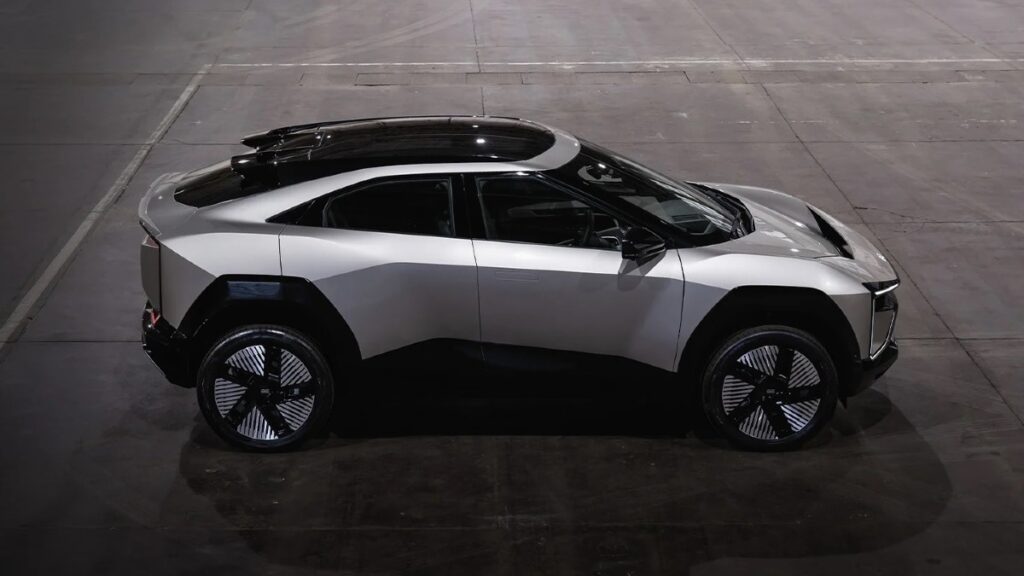
The Ebella adopts a clean, EV-specific SUV design rather than a radical or futuristic look. This is a deliberate choice aimed at buyers transitioning from ICE vehicles.
Inside, Toyota has focused on practicality and everyday comfort:
- Dual digital displays for driver and infotainment
- Panoramic dashboard layout
- Ventilated front seats
- 360-degree camera system
- ADAS safety features
- Seven airbags
The cabin positioning makes it clear that the Ebella is designed as a primary family car, not a secondary city EV.
Battery Rental Scheme: What It Actually Means for Buyers
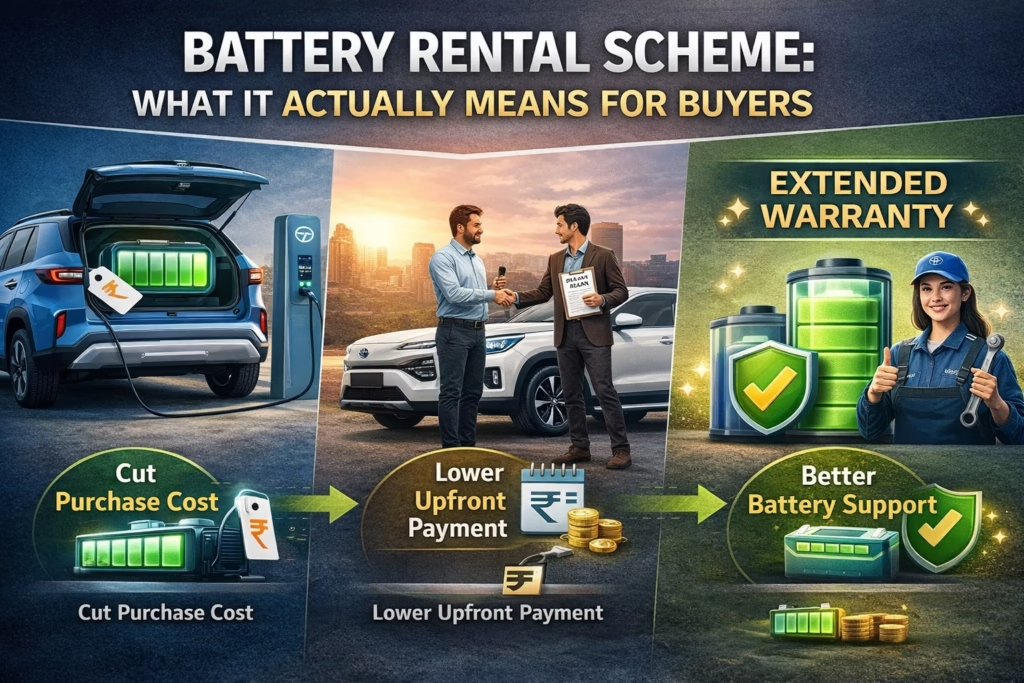
Toyota’s Battery-as-a-Service (BaaS) model is one of the most important aspects of this launch—and also the most misunderstood.
Instead of paying the full battery cost upfront, buyers can opt to:
- Purchase the vehicle body at a lower initial price
- Pay for battery usage separately via a rental plan
- Benefit from extended battery warranty coverage
Who This Helps
- Buyers worried about long-term battery degradation
- Owners planning to keep the car for 7–10 years
- Customers sensitive to high upfront EV prices
Who May Prefer Full Ownership
- Low-usage private owners
- Buyers planning short ownership cycles
- Those who prefer fixed, predictable monthly costs
This model shows Toyota is trying to de-risk EV ownership, not just sell an electric car.
Toyota Urban Cruiser Ebella EV vs Creta Electric vs e-Vitara
(Early Market Context)
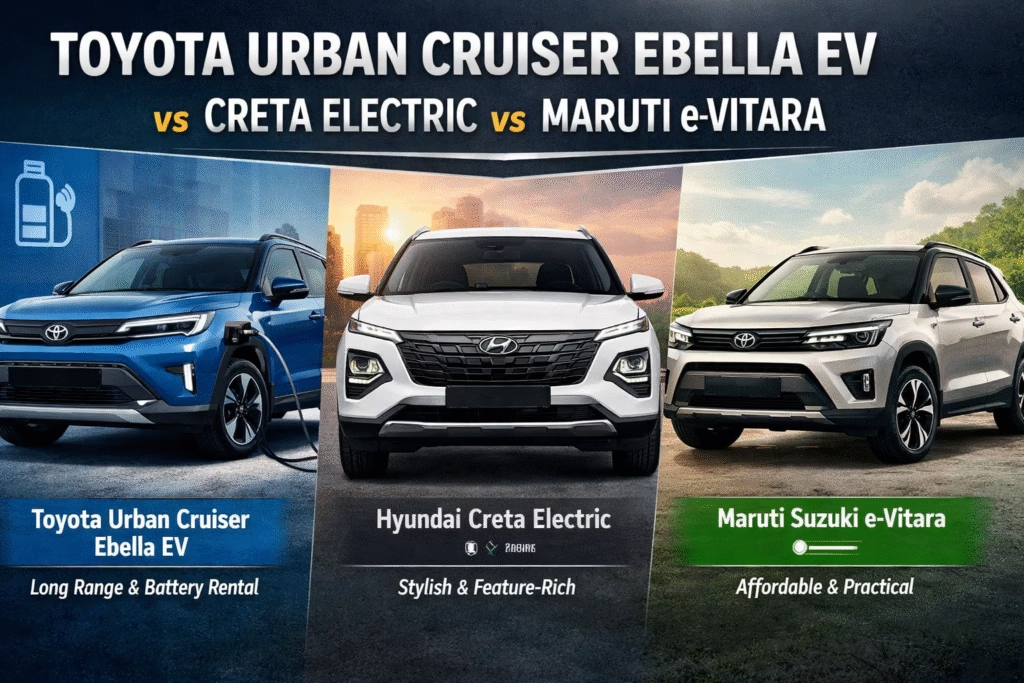
Toyota’s Ebella enters a segment that will soon see multiple launches. While full specifications of rival EVs are not yet officially confirmed, the positioning is already clear.
Positioning Snapshot (Non-Speculative)
| Area | Urban Cruiser Ebella EV | Creta Electric | e-Vitara |
|---|---|---|---|
| Segment Focus | Mainstream family EV | Urban lifestyle EV | Mass-market EV |
| Range Strategy | Long-range priority | Balanced range & features | Similar long-range focus |
| Ownership Model | Battery rental option | Conventional purchase | Conventional purchase |
| Safety Tech | ADAS standard focus | ADAS expected | ADAS expected |
| Core Strength | Ownership confidence | Brand familiarity | Dealer network scale |
This comparison is less about numbers and more about philosophy—Toyota is leaning heavily on reassurance, Hyundai on design appeal, and Maruti on reach.
Why This Launch Matters Right Now
Indian EV buyers are moving beyond curiosity. The questions have changed from “Should I buy an EV?” to “Can I live with one every day?”
The Urban Cruiser Ebella answers that with:
- Long claimed range
- Conservative, familiar SUV design
- Battery durability focus
- Reduced ownership anxiety through rental options
This approach mirrors how Toyota built trust with hybrids before scaling them in India.
Buyer Takeaway
The Toyota Urban Cruiser Ebella EV is not trying to be the most exciting electric SUV. Instead, it is positioning itself as the most reassuring.
For buyers upgrading from petrol SUVs and looking for their first long-term electric vehicle, the Ebella’s focus on range confidence, battery support, and predictable ownership could be its biggest advantage.
Final pricing, variant spread, and real-world efficiency will decide its market impact—but as an unveiling, the Ebella clearly shows Toyota is serious about India’s electric future.

Chetan is passionate about cars and keeps a close eye on every new launch in the Indian automotive market. At AutoNewsWala, he writes detailed car reviews, covering design, performance, features, and value for money to help readers make smarter buying decisions. His expertise lies in simplifying complex automotive details into easy-to-understand insights for car lovers.
Pingback: Toyota Ebella vs Maruti e Vitara: फर्क, समानता और क्या खरीदना सही रहेगा?
Pingback: 2026 से EVs में इंजन जैसी आवाज़ होगी जरूरी, सरकार का नया सेफ्टी नियम क्या बदलेगा? - Auto News Wala